Gujarat from Bangalore: Two Jyotirlingas, a Char Dham and 1,000 Years of History

Most pilgrimage trips take you to one great temple. Gujarat gives you a whole civilisation. In six days you'll stand before two of the twelve Jyotirlingas, walk through Krishna's own kingdom at Dwarka — one of the four Char Dham — and visit a Shiva temple that vanishes under the Arabian Sea twice a day.
And running quietly underneath all of it is one of the most remarkable stories in modern Indian history. We'll get to that.
If you're looking at a Gujarat tour package from Bangalore and wondering whether it's worth six days, here's what you'd actually be seeing.
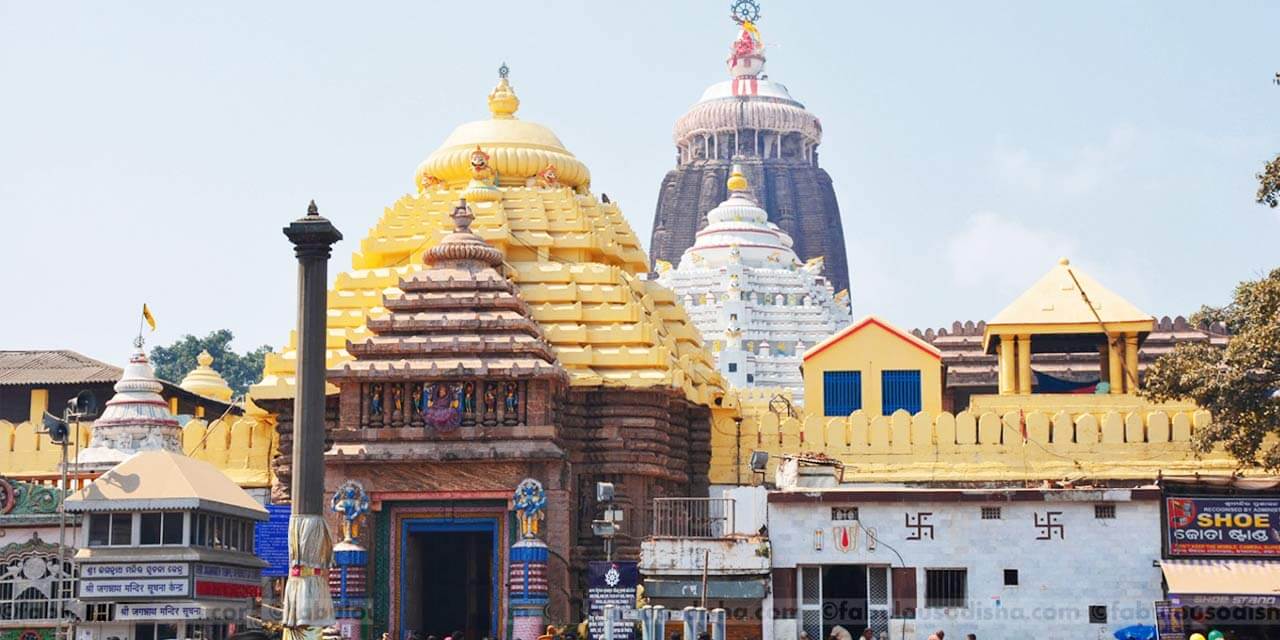
Somnath: the temple that refused to stay destroyed
Somnath is traditionally counted as the first of the twelve Jyotirlingas — the very first place Shiva is said to have appeared as a pillar of light. It sits on the Arabian Sea coast at Prabhas Patan, where the Kapila, Hiran and Saraswati rivers meet.
But its real story is what happened next.
Over roughly a thousand years, Somnath was looted and destroyed at least seven times — by Mahmud of Ghazni, by Alauddin Khalji's army, by the Delhi Sultanate, by Aurangzeb. And every single time, it was rebuilt.
Then came the moment that makes this temple different from any other in India. In November 1947, weeks after Independence, Sardar Vallabhbhai Patel stood in the ruins, took a handful of seawater in his palm, and vowed publicly that Somnath would rise again. Donations poured in from ordinary people. The rebuilt temple was reconsecrated on 11 May 1951, with President Rajendra Prasad present.
2026 marks 75 years since that day. If you've been meaning to make this trip, this is the year.
When you stand in front of that honey-coloured shikhara with the waves breaking below it, you're not just having darshan. You're looking at something that was flattened seven times and is still standing.
Nageshwar: the second Jyotirlinga
Near Dwarka stands Nageshwar, another of the twelve Jyotirlingas — the one associated with protection from all forms of poison and evil.
You'll spot it long before you arrive: a 25-metre statue of Lord Shiva seated in meditation, visible across the flat coastal landscape. Two Jyotirlingas in one trip is rare. Most pilgrims from Bangalore travel separately for each.


Dwarka: Krishna's kingdom
Dwarka is one of the four Char Dham — the four holiest pilgrimage destinations in Hinduism — and the city Krishna is said to have built and ruled.
At its heart is the Dwarkadhish Temple, its tall spire flying a flag that's changed several times a day, an unbroken ritual going back centuries. From there you'll cross to Bet Dwarka, the island where Krishna is believed to have lived, and the Rukmini Devi Temple, standing alone outside the main town — with its own story about a sage's curse that separated Rukmini from her husband.
For many families, this is the emotional centre of the whole trip.
Nishkalank Mahadev: the temple in the sea
This is the one people talk about afterwards.
After the Mahabharata war, the Pandavas were crushed by guilt at having killed their own kin. They went to Krishna for absolution. He gave them a black flag and a black cow, and told them to wander — when both turned white, they would be forgiven.
They walked for a long time. Nothing changed. Then they reached the shore at Koliyak, near Bhavnagar, and the flag and the cow turned white.
The Pandavas sat down there in penance, and Shiva appeared before them as five swayambhu lingams — one for each brother. They named the place Nishkalank: spotless, without blemish.
The temple stands about a kilometre out into the Arabian Sea. At high tide it disappears completely — only the flagpole and a pillar remain above water. At low tide the sea pulls back and you can walk barefoot across the seabed to reach the five lingams, each with its own Nandi facing it.
One honest thing to know: you can only visit at low tide, and the accessible window is roughly four to five hours a day. It shifts daily with the moon. This is exactly the kind of thing our guides plan the day around — but it's also why you shouldn't attempt this temple on your own without checking the tide chart.


The thread that ties it together
Here's the detail almost no one notices.
The man who stood in Somnath's ruins in 1947 and swore to rebuild it was Sardar Vallabhbhai Patel.
On Day 5 of this trip, you visit the Statue of Unity at Kevadia — at 182 metres, the tallest statue in the world — built to honour that same man.
So the journey begins at the temple Patel refused to let die, and ends at the monument to Patel himself. Very few itineraries in India close a circle that neatly, and most travellers only realise it when someone points it out. Now you'll notice it as it happens.
And the everyday marvels
Gujarat's history isn't only in its temples.
Adalaj Stepwell, built in 1499, descends five storeys underground — a water reservoir carved like a palace, where travellers once rested in the cool dark and prayed at the same time. It's engineering and devotion in one structure.
Akshardham in Gandhinagar is its modern counterpart: intricately carved sandstone, vast and serene.
Your 6 days, day by day
Day 1 — Bangalore → Ahmedabad → Dwarka. Fly in and travel on to Dwarka. Overnight there.
Day 2 — Dwarka → Somnath. Early morning darshan at the Dwarkadhish Temple, then Nageshwar Jyotirlinga, Bet Dwarka and the Rukmini Devi Temple. Afternoon journey down the coast to Somnath.
Day 3 — Somnath → Bhavnagar. Darshan at the Somnath Jyotirlinga, unhurried, with time by the sea. Then on to Bhavnagar.
Day 4 — Bhavnagar → Vadodara. Nishkalank Mahadev at Koliyak, timed to the tide. Afternoon drive to Vadodara.
Day 5 — Vadodara → Kevadia. On to Kevadia and the Statue of Unity. Overnight at Kevadia.
Day 6 — Kevadia → Ahmedabad → Bangalore. Adalaj Stepwell, Akshardham and the Ahmedabad Vaishnodevi temple, then your flight home.
A word about the distances, honestly. Gujarat is a big state and these sites are genuinely spread across it — Dwarka to Somnath alone is around 238 km. You'll spend real time on the road. That's the trade-off for covering two Jyotirlingas, a Char Dham and the Statue of Unity in one trip, and it's why we run it on a comfortable AC coach with proper breaks rather than trying to rush it. If your family enjoys watching a countryside roll past between temples, you'll love it. If long drives are difficult for someone travelling with you, tell us upfront and we'll advise honestly.
Best time to visit Gujarat
November to February is ideal — cool, dry and comfortable on the coast, and pleasant for the long drives.
Avoid April to June, when Saurashtra gets genuinely punishing, and the July–September monsoon, when coastal roads slow down. Note too that the Nishkalank Mahadev fair falls on Bhadarvi Amavasya (around August–September) — extraordinary to witness, but enormously crowded.
Frequently asked questions:
Q: How many Jyotirlingas does this trip cover?
A: Two — Somnath, traditionally the first of the twelve, and Nageshwar near Dwarka.
Q: Is Dwarka one of the Char Dham?
A: Yes. Dwarka is one of the four Char Dham sites, alongside Badrinath, Puri and Rameswaram.
Q: Why does Nishkalank Mahadev disappear?
A: It stands about a kilometre out at sea. At high tide it's submerged; at low tide you walk across to it. Your visit is timed to the tide, which changes daily.
Q: How much travel is involved?
A: A fair amount — Gujarat's sacred sites are spread widely, with several long coach journeys. Everything is on a comfortable AC coach with breaks, but this is a trip that covers ground.
Q: Is it suitable for elderly parents?
A: Yes, with one caveat: the drives are long, and Nishkalank Mahadev involves a walk across the seabed. Tell us about any mobility concerns and we'll plan around them.
Q: When should I go?
A: November to February. Avoid the summer heat and the monsoon.
Walk through a thousand years
Some trips you take for the darshan. This one gives you that — two Jyotirlingas and a Char Dham — and then hands you something extra: the sense of standing inside a story that's still going.
A temple rebuilt seven times. Five lingams the sea covers and uncovers each day. A promise made in 1947 that's still keeping its word 75 years on.
Trusted by 2,00,000+ travellers since 2010.
👉 See the Gujarat package, or WhatsApp us for the next departure date. Har Har Mahadev. Jai Dwarkadhish.
Share on Social Media: